How to personalise a funeral
Almost every part of a funeral can be made particular to the person it is for, whether the ceremony is religious or not. This guide goes through the choices in the order you will meet them – the ceremony, the music, the coffin, the flowers, the transport and the day itself – and explains where the practical limits are.
- 7 minute read
- 12 September 2026

Start with the person, not with the list
It is easy to work through a list of options and end up with a funeral that is unusual without being personal. The more useful question is a simpler one: what would anyone who knew them recognise straight away?
It is usually something small – the music they had on in the car, the football scarf, the colour they always wore, the walk they took every morning. One or two of those, done properly, do more than a dozen additions.
Personalising a funeral does not mean abandoning tradition either. A church service, a Requiem Mass or a traditional burial can hold as much of a person as anything else. And if a conventional funeral is what they would have wanted, that is the personal choice.
The ceremony itself
Who leads it shapes everything else. A minister or priest will follow the form of their tradition, with room within it. A celebrant writes the ceremony with you around the person's life, and will meet you beforehand to hear about them. See what is a funeral celebrant and non-religious funerals.
Within the ceremony you can choose the tribute or eulogy and who gives it, readings, poems or passages, a period of silence, a candle lit by the grandchildren, or several people each saying something short rather than one long address. See how to write a eulogy.
If nobody feels able to speak on the day – which is common – write it and ask the celebrant or minister to read it. That is a normal request, not a failure of nerve.
Music
Music is the thing mourners remember, and there is usually room for three pieces: as everyone comes in, during a reflection, and as they leave. The last one sets the mood people carry out of the door, so it is worth choosing deliberately.
Crematoria and many churches have a music system that can play almost any recorded track, though the version matters – a live recording or a cover can take people by surprise. Give the exact recording, including the artist, well in advance.
Live music is possible too: an organist, a piper, a choir, a grandchild with a guitar, or the brass band or choir the person belonged to. Ask early, because it affects the timing.
A note on the words. Cheerful music is entirely allowed, and so is music that makes everyone cry. Both are fine; it is only worth listening right through to the lyrics first.
The coffin, the flowers and the transport
The coffin. Beyond the traditional wood veneers there are solid timber, wicker, willow, bamboo and cardboard coffins, coloured and painted ones, and picture coffins printed with anything from a landscape to a football ground. A plain coffin can also be personalised on the day – a scarf, a flag, a blanket, a painting by the children laid on the lid.
Flowers. A tribute can be shaped, made in one colour, or made from garden flowers rather than a florist's. Single stems handed out at the committal let everyone take part. See funeral flowers and floral tributes, and charity donations if you would rather ask for those instead.
Transport. As well as a traditional hearse there are horse-drawn hearses, motorcycle and sidecar hearses, vintage and modern alternatives, and in some places a lorry, a tractor or a camper van. A route past a home, a workplace or a favourite spot can be arranged and costs nothing extra. See hearses and funeral cars.
The day itself
What people wear. Families often ask for a colour, a football shirt, or simply for people not to feel they must wear black. Say so in the funeral notice and say it kindly, so that anyone who would rather wear black still feels welcome. See what to wear to a funeral and clothing and colour themes.
Photographs and belongings. A photograph beside the coffin, a slideshow if the venue can show one, or a table at the wake with their things on it – medals, tools, knitting, the well-thumbed book. People stand at that table and talk, which is the point of it.
Who takes part. Family bearers, a guard of honour from a club, regiment or colleagues, an order of service the grandchildren have drawn, or somebody handing out the orders of service at the door.
Afterwards. The wake is part of the funeral and is often where the personality really shows: their local, their recipes, their music. See organising a wake and the day of the funeral.
Where the practical limits are
Time. Crematorium ceremonies run to a timetable, commonly around half an hour including coming in and going out. A double slot can usually be booked. Tell the funeral director everything you want to include and let them tell you whether it fits, rather than discovering on the day that something has to be dropped.
The venue's own rules. Churches follow the practice of their denomination and some limit secular music and readings. Crematoria, cemeteries and natural burial grounds each have rules about what may be placed on or in the coffin, and about flowers and containers.
Safety and licensing. Anything involving fireworks, balloons, sky lanterns, doves or a release of any kind needs checking with the venue first. Released balloons and lanterns are litter, harm wildlife and livestock, and are banned by many councils and landowners – bubbles, petals, a bell, or planting something are kinder alternatives.
Cost. Most personal touches cost little or nothing. Alternative transport, a picture coffin and live music are the ones that add materially to the bill, and every funeral director must publish a standardised price list you can check them against. See how to reduce funeral costs.
If the family do not agree
Personal funerals are where families most often fall out, usually between somebody who wants a celebration and somebody who wants something formal and quiet.
Two things help. Go back to what the person themselves would have chosen, which takes the argument away from anyone present. And split the day: a traditional ceremony followed by a wake that is anything but, gives everybody the funeral they needed without either side giving way.
Whoever is arranging the funeral has the final say in law, but a decision the rest of the family cannot live with is a poor use of it.
Find a funeral director
Tell your funeral director what you have in mind, however unusual it sounds. Most of it has been arranged before, and they will know what the local venues allow.
Reviews for Dignity Group
- Included:Over 200 years of caring for families
- Included:Local service from over 500 branches
- Included:Funerals, plans, probate and more
Frequently asked questions
We're here to answer all your questions. If anything isn't clear, please ask us.
Trusted by families across the UK
Related guides
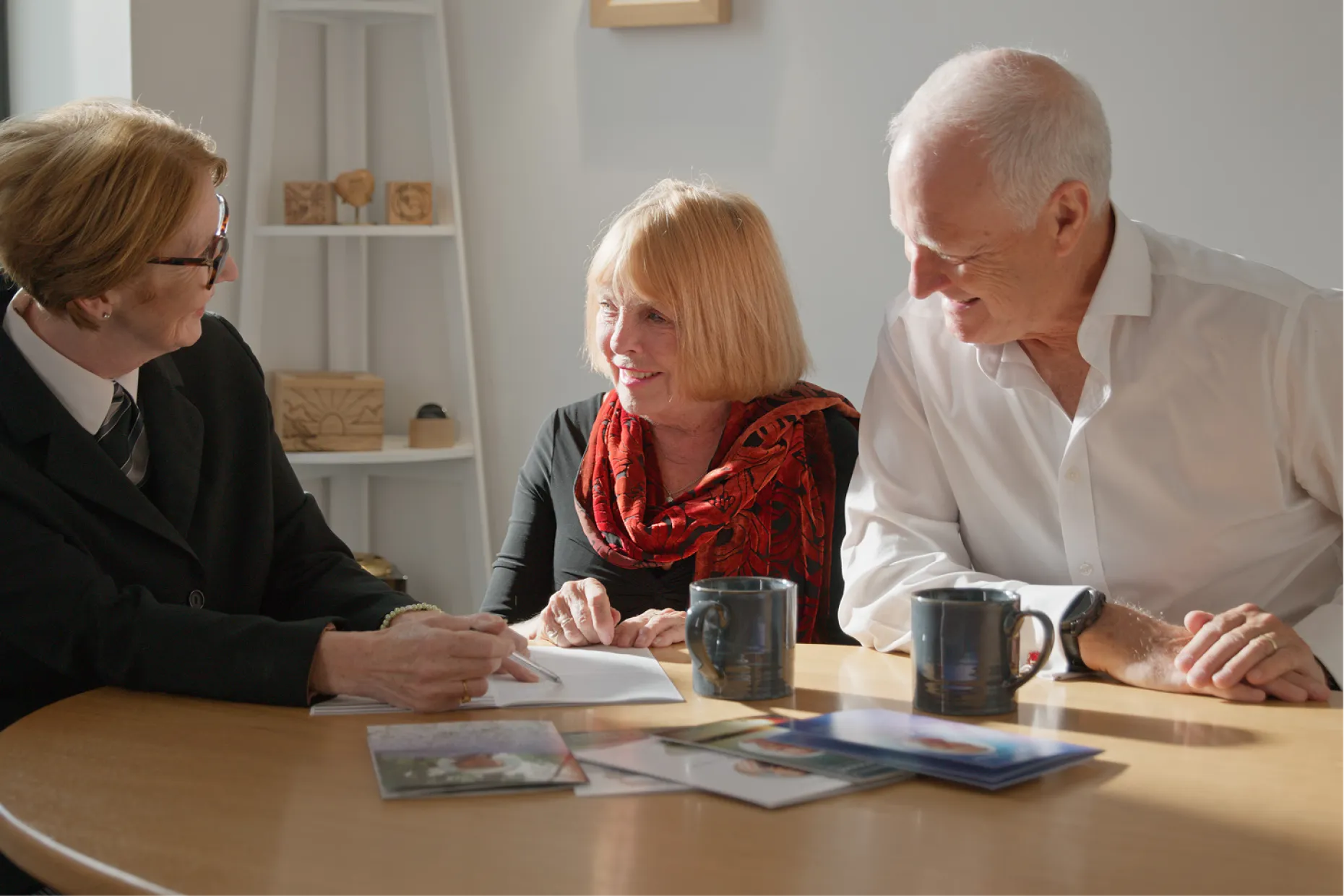
Questions to ask a funeral director
Fourteen questions worth asking before you appoint a funeral director – on costs, care, personalisation and paperwork – and what the answers tell you.

Glossary of funeral terms
Plain explanations of the words you will meet when arranging a funeral, from bearer and catafalque to interment, intestate, probate and disbursements.

Funeral music
Choosing funeral music – popular, classical, modern and uplifting songs, with lists for a mum, dad, nan or grandad, and how many pieces you need.