Gifts and flowers
Flowers are welcome and may be laid on the coffin during the service. Many families ask for donations to a charity instead, which is usually noted in the funeral notice.
An Anglican funeral is available to everyone, whether or not the person who has died was a churchgoer. Your local vicar will lead it, in church, at the graveside or at a crematorium. This guide covers what to expect – before, during and after – and how your local Dignity funeral director can support you to arrange an Anglican funeral.
Anglican belief about death rests on resurrection hope. The traditional burial service opens with Christ’s words ‘I am the resurrection and the life’, and the appointed reading is Saint Paul’s account of the resurrection in 1 Corinthians 15.
The Church of England frames the funeral as a message of hope: that death is not the end. Anglican teaching draws on the Bible and centuries of Christian tradition rather than one fixed statement of belief, so you'll find some variation in emphasis between parishes. What is constant is that the person who has died is entrusted to God, in sure and certain hope.
A Church of England funeral can be asked for by anyone, for anyone they knew and loved. Neither the person who has died nor the person arranging it needs to have attended church, and a minister will take a funeral for anyone who lived in their parish.
The contemporary liturgy comes from Common Worship. Where a family prefers traditional language, the 1662 Book of Common Prayer service is still available. Services may be held in church, in a churchyard, at the graveside, at a crematorium chapel, in a cemetery or at a natural burial ground – and may be split between two of them.
At Dignity, we support families of every faith and background. From approaching your parish on your behalf to arranging a split service between church and crematorium, we have the expertise and experience to honour every detail. If you need to arrange an Anglican funeral, just contact your local Dignity funeral director who will talk everything through with you.
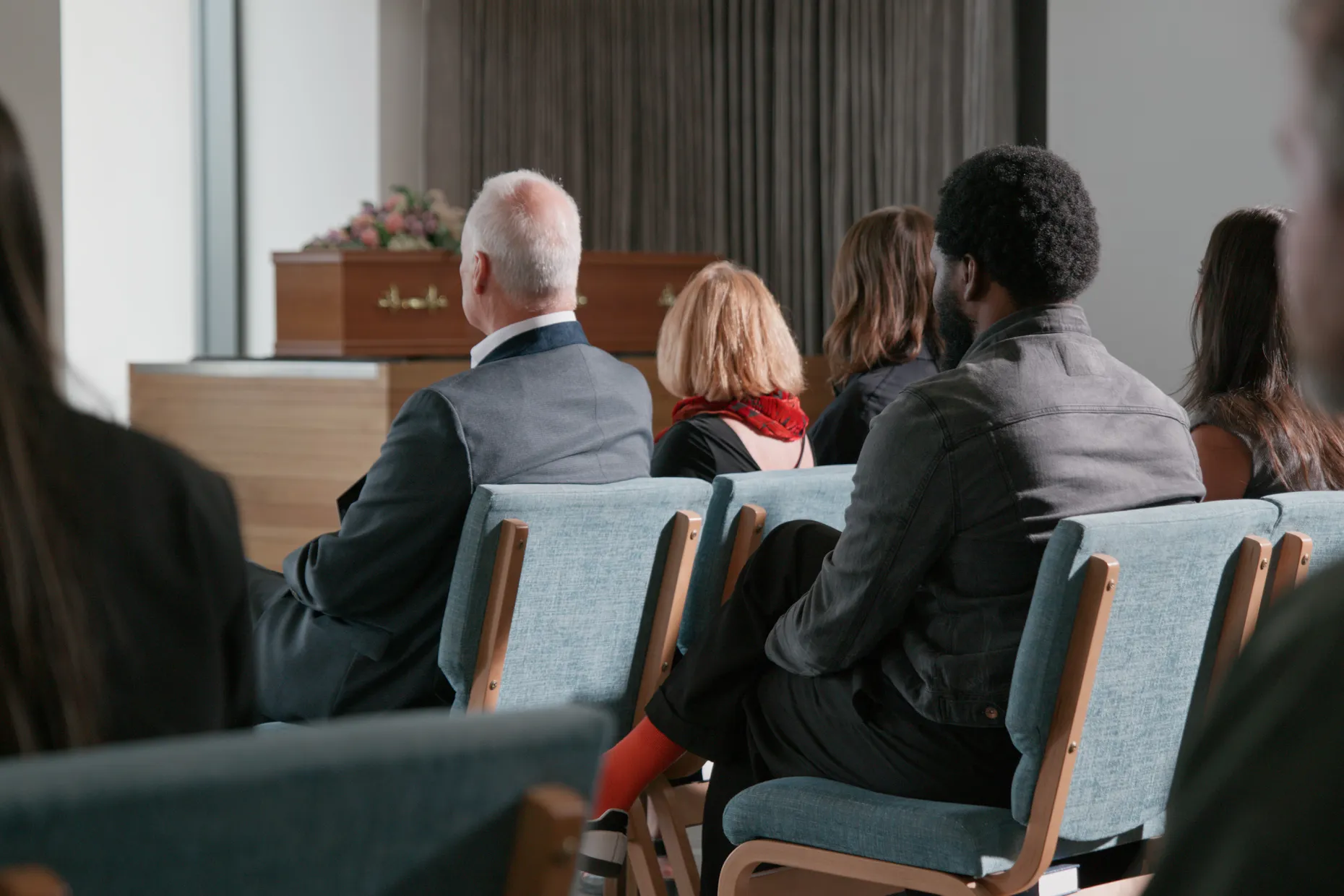
Anglican funerals are familiar to most people in the UK, and nothing is expected of you beyond being there. Here's what to expect:
Flowers are welcome and may be laid on the coffin during the service. Many families ask for donations to a charity instead, which is usually noted in the funeral notice.
There's no food during the service itself. Most families host a gathering afterwards – tea, sandwiches and shared memories at home, at a hall or at a nearby venue.
It is still common to wear smarter clothes in subdued colours, though some families ask for something brighter. Whatever you wear, arriving in good time matters more.
The minister will say when to sit and stand. It is usual to stand as the coffin is brought in, for the hymns, and at the end of the service.
The cost of an Anglican funeral in the UK depends on the funeral director, the church, and the churchyard, cemetery or crematorium you choose. Most families choose a service in their parish church or at a crematorium, led by their minister. Church fees are set nationally by the Church of England and are separate from our own charges, as are cemetery and crematorium fees, which vary by location. A churchyard memorial is charged separately again and cannot be erected for six months. Your local Dignity funeral director can talk you through everything that is included, and the costs, so you can plan with confidence.
Our funeral directors are at the heart of their communities, in over 500 locations across the UK. Wherever you live, you’ll have an experienced professional by your side throughout, caring for you and the person who’s died.
At Dignity, we’re here to support people of all religions and none. We can arrange Catholic, Methodist, Baptist, Quaker, Orthodox, Hindu, Muslim, Jewish, Buddhist and Sikh funerals. Call your local funeral director today to talk about your needs.
Reviews for Dignity Group
We’re here to answer all your questions. If anything isn’t clear, please ask us.

African funerals, where the rite usually comes from the family's Christian or Muslim faith with traditional practice alongside – etiquette and costs.
Nigerian funerals, split between Muslim and Christian rites by region, with indigenous practice alongside – what to expect, etiquette and costs.

A Hindu funeral is a farewell and a step in the soul's onward journey: what to expect before, during and after, etiquette, what to wear and costs.