Gifts and flowers
Flowers are usually welcome, and wreaths or a spray may be placed on the coffin. Many families ask for donations to a charity instead. Gifts of money to the family are not expected.
A Christian funeral gives thanks for a life and entrusts the person who has died to God. The shape of the service varies a great deal between churches, but the hope it proclaims is shared. This guide covers what to expect – before, during and after – and how your local Dignity funeral director can support you to arrange a Christian funeral.
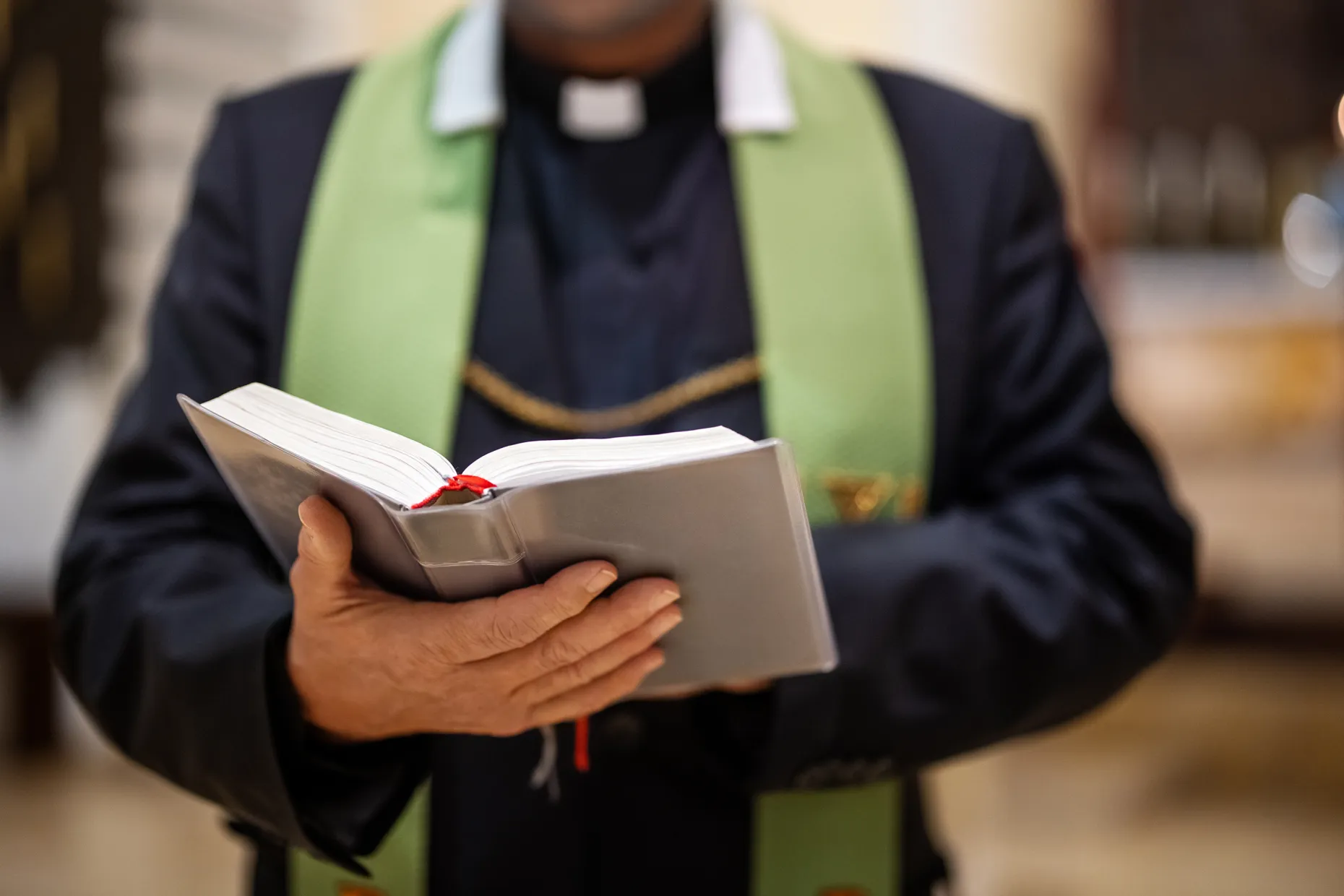
Christians believe that death is a passing rather than an ending. The Nicene Creed, shared across faiths, looks for ‘the resurrection of the dead, and the life of the world to come’. Christian death takes its meaning from the death and resurrection of Christ, so a funeral is both a farewell and a statement of hope.
Beyond that shared ground, beliefs differ. Catholic teaching holds that souls who die in God's grace but are not yet fully purified go through a period of purification before entering heaven – which is why prayer for the person who has died matters so much in a Catholic funeral. Methodist teaching focuses on resurrection rather than an immortal soul. Many Protestant churches say less about what happens straight after death, and more about the promise of eternal life to come.
In the UK a Christian funeral usually takes place a week or two after the death, arranged around the family, the church and the crematorium or cemetery. It may be held in church, at the graveside, at a crematorium chapel, or split between two of these.
What happens inside the service depends on the church. A Catholic funeral centres on the Mass. An Anglican or Methodist funeral follows a set liturgy from an authorised service book. A Baptist funeral is shaped locally by the minister and family. A Quaker meeting for worship is held largely in silence. All of them end with the committal.
At Dignity, we support families of every church and none. From liaising with your parish or chapel to arranging a split service between church and crematorium, we have the expertise and experience to honour every detail. If you need to arrange a Christian funeral, just contact your local Dignity funeral director who will talk everything through with you.
Christian funerals differ between churches, so if you are unsure about anything it is always fine to ask the family or the minister. Here's what to expect:
Flowers are usually welcome, and wreaths or a spray may be placed on the coffin. Many families ask for donations to a charity instead. Gifts of money to the family are not expected.
There is no food during the service. Most families host a gathering afterwards – often called the wake – at home or at a nearby venue, where tea, sandwiches and shared memories are the norm.
Smart clothes in subdued colours are still usual, and black is traditional in many families, though this varies. Some families ask for bright colours instead. If you are unsure, ask.
The minister will say when to sit and stand. It is usual to stand as the coffin is brought in, for hymns, and at the end. You are welcome to join the hymns or simply listen.
The cost of a Christian funeral in the UK depends on the funeral director, the church, and the crematorium or cemetery you choose, along with any personal touches. Most families choose an attended funeral with a service led by their own minister, followed by burial or cremation. Church fees, and cemetery or crematorium fees, are set separately from our own and vary by location. Your local Dignity funeral director can talk you through everything that is included, and the costs, so you can plan with confidence.
Our funeral directors are at the heart of their communities, with over 500 branches across the UK. Search below to see if we have a funeral director near you.
At Dignity, we’re here to support people of all religions and none. We can arrange Catholic, Anglican, Methodist, Baptist, Quaker, Orthodox, Hindu, Muslim, Jewish, Buddhist and Sikh funerals. Call your local funeral director today to talk about your needs.
Reviews for Dignity Group
We’re here to answer all your questions. If anything isn’t clear, please ask us.
Latter-day Saint funerals, where death is a step in the plan of salvation rather than an ending, with what happens on the day and what it costs.

Chinese funerals, where Buddhist, Taoist and Christian rites may sit side by side, and duty to the family shapes the day – etiquette and costs too.
Japanese funerals, usually Buddhist in form with Shinto alongside at home, and the ancestral altar that follows – what to expect, and what it costs.