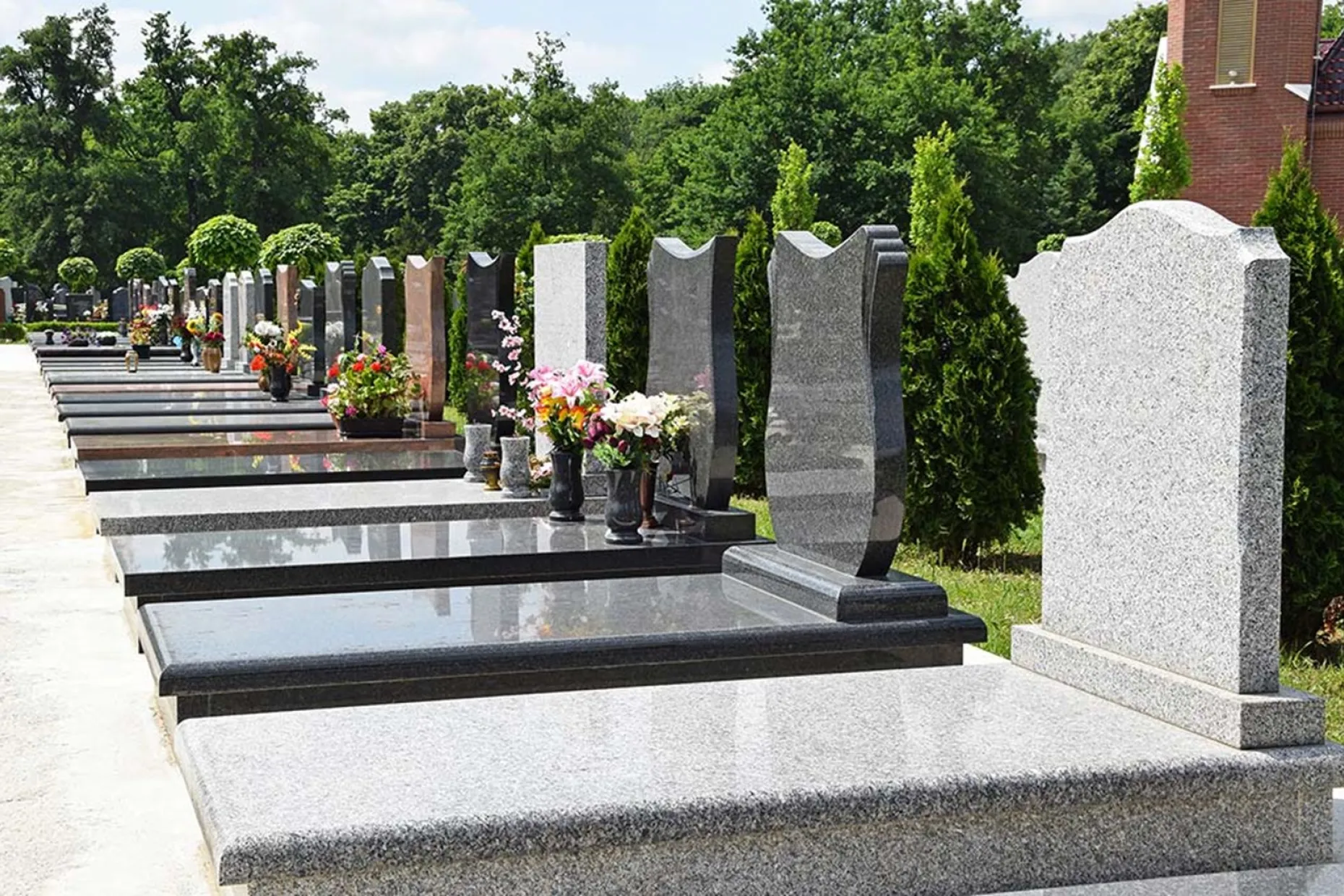
Headstones
Choosing a headstone: materials, shapes, finishes and inscriptions, the cemetery rules that apply, and how long you must wait before one can be fixed.
When choosing a memorial for a loved one there a number of things to take into account, from regulatory issues to maintaining the memorial itself. We’ve listed a number of memorial ideas and considerations below.

Crematoria, churchyards and cemeteries have regulations that govern the size and type of memorial allowed within the grounds. For example, many churchyards do not allow polished materials. Your local Dignity funeral director will be able to advise you on memorial regulations in your area.
It is important to consider where the memorial will be placed. For example, if the grave is close to a tree or hedge, a marble memorial may be stained by sap or decaying leaves. A granite memorial is non-porous and may be more suitable.
Some materials will suit certain types of lettering more than others. For example, lead lettering should only be used for marble memorials and gilded lettering looks best on polished granite.
The colour of the material can be used to enhance the effect of special designs. For example, mottled and light-coloured stones may be less effective than plain, dark-coloured materials.
All memorials require cleaning to maintain their appearance and to avoid deterioration. Polished materials are usually easier to keep clean.
There are many types of materials available for memorials but the most common are granite, marble and stone.
When you have chosen the type of material you want for your memorial, you will need to consider the wording you would like. There may be local regulations regarding this and your local Dignity funeral director will be able to advise you.
Our skilled stonemasons work on creating an individual and lasting memorial for you. They are specialists in cutting, polishing and engraving, and details can be changed to reflect your personal requirements.
Read our guide on headstone inscriptions.
Your favourite photograph of the deceased can be recreated to form part of the memorial, and will forever remain a lasting memento. If the photograph is of sentimental value, we would recommend that you provide us with a copy of the original, which can be obtained from any good photographers.
Contact your local Funeral Director for professional and expert advice on memorials. They will guide you through all of your available options and explain memorial costs in more detail.
Reviews for Dignity Group
We’re here to answer all your questions. If anything isn’t clear, please ask us.
Read more about arranging and paying for a funeral.
Choosing a headstone: materials, shapes, finishes and inscriptions, the cemetery rules that apply, and how long you must wait before one can be fixed.

Wording a headstone – what cemeteries and dioceses allow, examples of inscriptions, whether it can be changed later, and who you buy the stone from.

Traditional stone memorials – headstones, grave markers, statues and accompaniments – how long before one can be fitted, and adding to it later.