Memorial jewellery
Memorial jewellery, also called cremation jewellery or remembrance jewellery, is a piece made to hold something of the person who has died – a small portion of ashes, a lock of hair, a fingerprint or an engraved line. This guide covers what can be held, how it is made, what to ask before you send anything away, and what each metal is like to wear.
- 6 minute read
- 12 September 2026

What memorial jewellery is
Memorial jewellery is an ordinary piece of jewellery – a pendant, a ring, a bracelet, a pair of earrings, a set of cufflinks – made or adapted to carry something of the person who has died, or engraved in their memory.
It appeals to people who want something private. A headstone is in one place and is visited; a pendant is with you on an ordinary Tuesday. Families often order several small pieces so that everyone has one, which also suits a family who cannot agree on a single memorial.
You will see it sold as cremation jewellery, ashes jewellery and remembrance jewellery. They mean the same thing.
What a piece can hold
Ashes. Only a very small amount is needed – typically a pinch, about a teaspoon at most. The rest stays with you, so choosing jewellery does not rule out burying or scattering the ashes as well.
Hair. A few strands, set in the same way as ashes. This is the option for families who chose burial, and for pets. If it might be wanted, a lock has to be taken before the funeral – your funeral director can do it if you ask.
A fingerprint. Taken by the funeral director before the funeral and reproduced in the metal. Ask early; it cannot be done afterwards.
Fibres or soil. A thread from a favourite jumper, or earth from a place that mattered.
An engraving. A name, a date, a short line, or handwriting laser-etched from a letter or a card. This needs nothing to be sent away but a photograph or a scan, which makes it the simplest option by far.
How ashes are set into a piece
In glass. The ashes are fused into molten glass, so the piece is solid and sealed and the ashes cannot come out. Each one comes out slightly different. The most durable method and usually the most expensive.
In resin. The ashes are suspended in clear or coloured resin. A wide choice of colours, and less costly than glass. Resin can dull or discolour over many years, particularly if it is worn daily or exposed to perfume, chlorine and sunlight.
In a chamber. A small hollow compartment, usually closed with a screw fitting and sealed with adhesive. The ashes stay loose inside and are not set in anything, so they could in principle be removed later. It is also the method to be most careful with, since a fitting that works loose cannot be undone.
Into the metal itself. Some makers incorporate a trace of ashes into the metal during casting, and some grow a laboratory-created diamond or gemstone from the carbon in them. The last of these takes months and is the most costly option available.
Before you send ashes anywhere
Memorial jewellery is not a regulated trade, and the great majority of makers are careful and kind. A few questions make the difference, and they are easier to ask before you pay than afterwards.
Ask exactly how much is needed, and send only that – never the whole of the ashes. Ask what happens to anything not used, and whether it is returned. Ask who handles it and where the work is done, because some sellers pass the work to a third party abroad.
Ask how long it will take, get the price in writing including the setting and any engraving, and ask what happens if the piece is damaged or the seal fails. Ask whether the ashes can be replaced if something goes wrong – with most methods they cannot.
Send by a tracked, signed-for service, and keep a note of what you sent and when. Take a photograph before it goes.
Choosing a metal
Sterling silver. The usual choice and the most affordable. It tarnishes and needs an occasional polish, and it is soft, so a ring worn every day will mark over time.
Gold. Harder wearing than silver and it does not tarnish. Yellow, white and rose golds are all common; white gold is usually rhodium plated, and the plating needs redoing every few years to stay bright.
Platinum. The most durable and the most expensive. It keeps its colour indefinitely and suits a piece meant to be worn every day for decades.
Stainless steel and titanium. Inexpensive, very hard wearing and hypoallergenic. Titanium rings cannot usually be resized, which matters more than people expect.
If it will be worn constantly, think about practicality as much as appearance: a pendant worn under clothing is the safest option, and a ring on a working hand takes a great deal of punishment. Ask about the clasp on a pendant, since that is what most often fails.
Looking after it, and insuring it
Take it off before swimming, showering, gardening and sleeping. Chlorine, salt water, household cleaners and perfume all shorten the life of resin and of plated metals. Keep it in a soft pouch rather than loose in a box.
Have it checked by a jeweller every couple of years, particularly the clasp and any screw fitting.
It is worth adding to your home insurance as a named item and having it valued, but do say plainly what it is: no replacement is the same, and knowing the insurer will only ever pay the metal value is better known now than after a loss.
Find a funeral director
Your funeral director can take a lock of hair or a fingerprint before the funeral, and put you in touch with our memorial specialists.
Reviews for Dignity Group
- Included:Over 200 years of caring for families
- Included:Local service from over 500 branches
- Included:Funerals, plans, probate and more
Frequently asked questions
We're here to answer all your questions. If anything isn't clear, please ask us.
Trusted by families across the UK
Related guides

Memorial trees
Planting or dedicating a tree in someone’s memory – where you can do it, how to personalise it, whether ashes can be buried there, and how long it lives.
Memorial benches
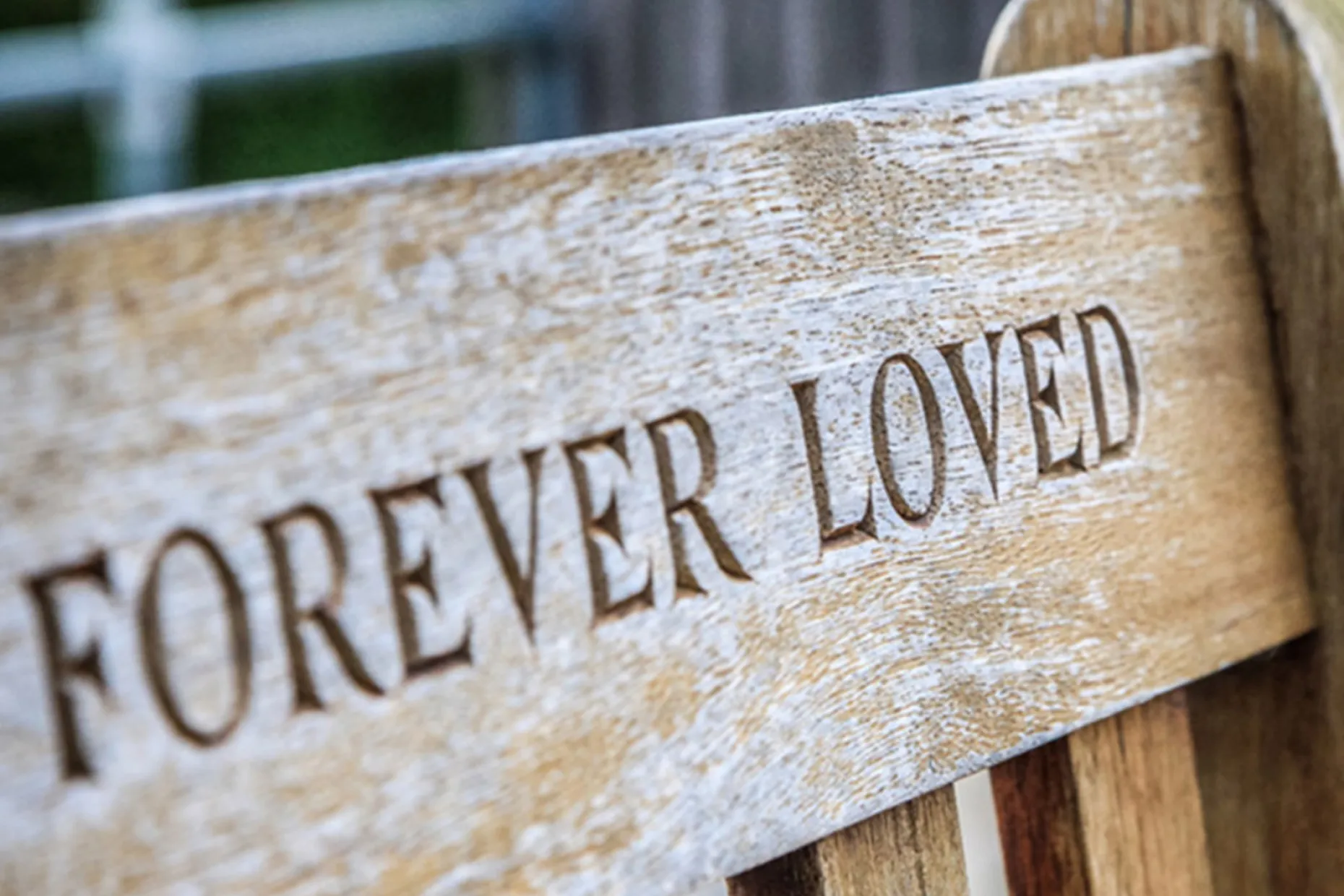
Placing a bench in someone’s memory – where it can go, the permissions needed, choosing the material and inscription, and who maintains it afterwards.
Memorial plaques
Choosing a memorial plaque – where one can be fixed, from benches and trees to walls and theatre seats, the materials used, and wording it well.