Gifts and flowers
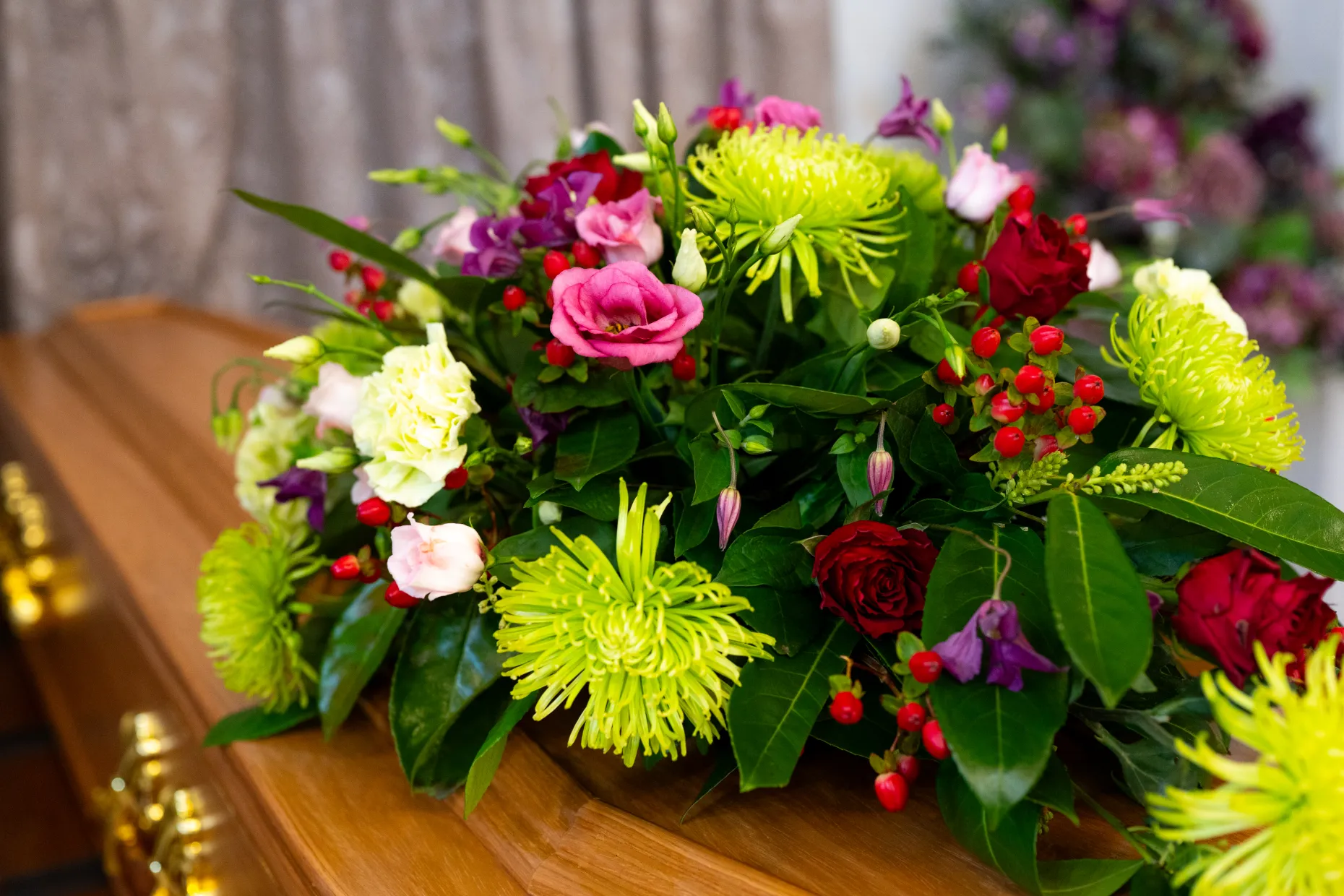
Fresh flowers in moderation. Flowers and wreaths are taken off at the church door and put back afterwards. Having a Mass offered for the person who has died is a common alternative to flowers.
A Roman Catholic funeral centres on the Mass, celebrated for the person who has died. Families often ask whether Roman Catholic and Catholic differ: they describe the same Church. This guide covers what to expect – before, during and after – and how your local Dignity funeral director can support you to arrange a Roman Catholic funeral.
The term Roman Catholic and the term Catholic describe the same Church, led by the Pope as Bishop of Rome. The Catholic Bishops’ Conference of England and Wales uses ‘Catholic’ in its own guidance for families and for funeral directors, so if your family says Roman Catholic, the rites described here are the ones you can expect.
The word ‘Roman’ is sometimes added for two reasons. Strictly, it refers to the Latin Church. And ‘catholic’ also appears in the Creed as a word other Christians use of themselves, so the qualifier can distinguish one from the other.
The Church especially encourages a funeral Mass, sometimes called a Requiem Mass, because it remembers and celebrates Christ’s own death and resurrection. Only a priest can celebrate it.
The Catholic Church is larger than the Latin Church. It also includes the Eastern Catholic Churches, in full communion with the Pope and of equal standing, which keep their own rites and their own canon law. If your family is Ukrainian Greek Catholic, Maronite, Melkite, Syro-Malabar or Chaldean, the funeral rite is not the Order of Christian Funerals and its parts are differently named. We will speak to your eparchy rather than assume.
At Dignity, we support families of every faith and background. From arranging the Requiem Mass with your parish priest to handling the pall and the tributes on the day, we have the expertise and experience to honour every detail. If you need to arrange a Roman Catholic funeral, just contact your local Dignity funeral director who will talk everything through with you.
A Requiem Mass has conventions that are worth knowing before the day. Here's what to expect:
Fresh flowers in moderation. Flowers and wreaths are taken off at the church door and put back afterwards. Having a Mass offered for the person who has died is a common alternative to flowers.
None during the Mass. Families gather afterwards, and where a vigil is held at home the evening before, visitors are usually fed there.
Smart and subdued. No head covering is needed. Non-Catholics are welcome at the Mass and it is usual to remain seated during Communion rather than come forward.
Only Christian symbols may rest on the coffin during the liturgy – the pall, a cross or Bible, candles, holy water, incense and flowers. National flags and association insignia have no place in the liturgy itself, though they can be replaced afterwards.
The cost of a Roman Catholic funeral in the UK depends on the funeral director, the parish, and the cemetery or crematorium. Most families choose a funeral Mass in their own parish church followed by a committal. Because a Mass runs to around 45 minutes, a crematorium service may need a longer or later slot, which can affect the fee. Church offerings and cemetery or crematorium charges are set separately from our own. Your local Dignity funeral director can talk you through everything that is included, and the costs, so you can plan with confidence.
Our funeral directors are at the heart of their communities, in over 500 locations across the UK. Wherever you live, you’ll have an experienced professional by your side throughout, caring for you and the person who’s died.
At Dignity, we’re here to support people of all religions and none. We can arrange Anglican, Methodist, Baptist, Quaker, Orthodox, Hindu, Muslim, Jewish, Buddhist and Sikh funerals. Call your local funeral director today to talk about your needs.
Reviews for Dignity Group
We’re here to answer all your questions. If anything isn’t clear, please ask us.
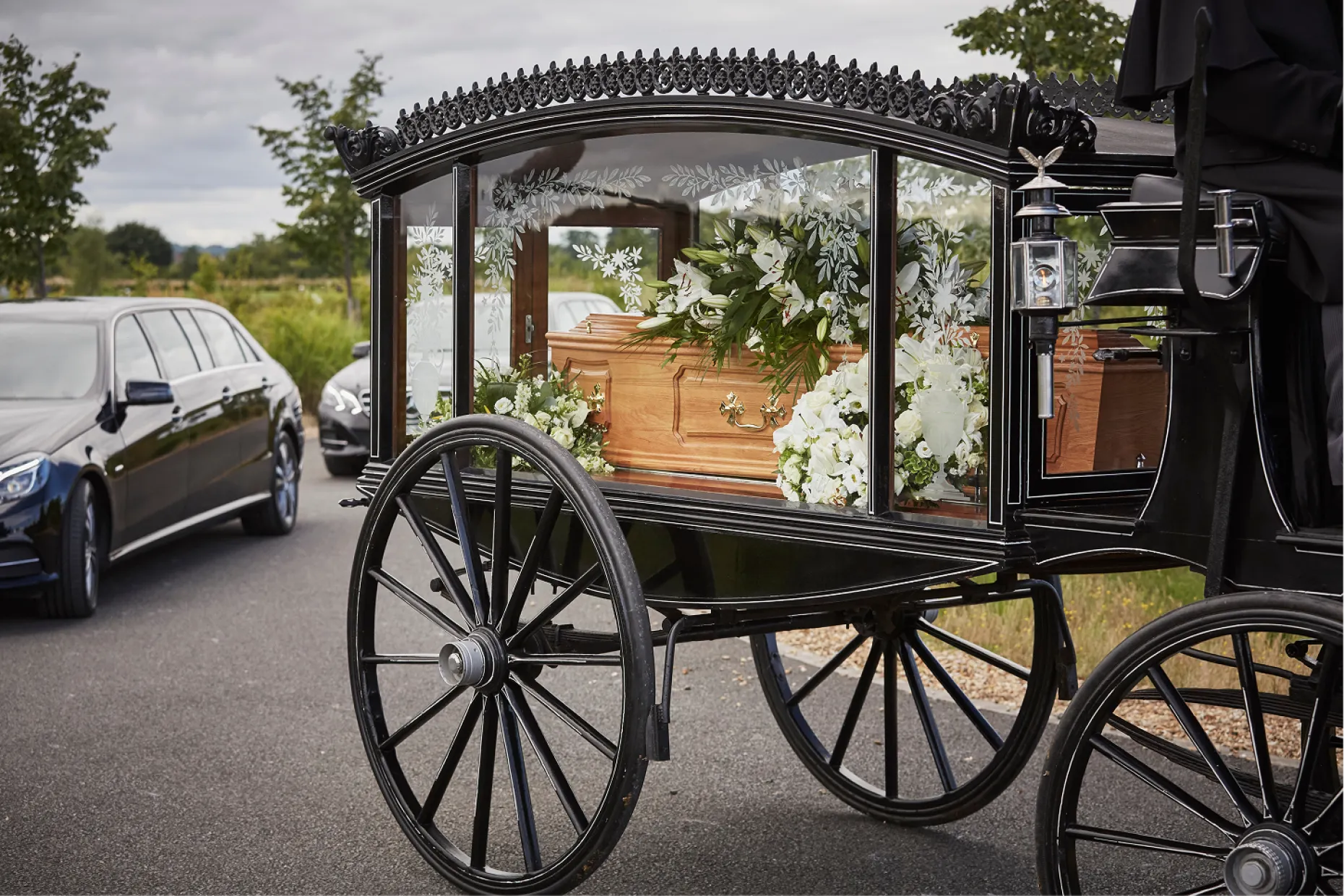
A Catholic funeral has three stages – vigil, funeral liturgy and committal: what to expect before, during and after, etiquette, what to wear and costs.

Jamaican funerals, Protestant in form across several denominations, with what to expect on the day, the etiquette, the key terms and the costs.
Caribbean funerals, where practice varies widely by church and island, so the guide covers what to ask your own church, the etiquette and the costs.