Gifts and flowers
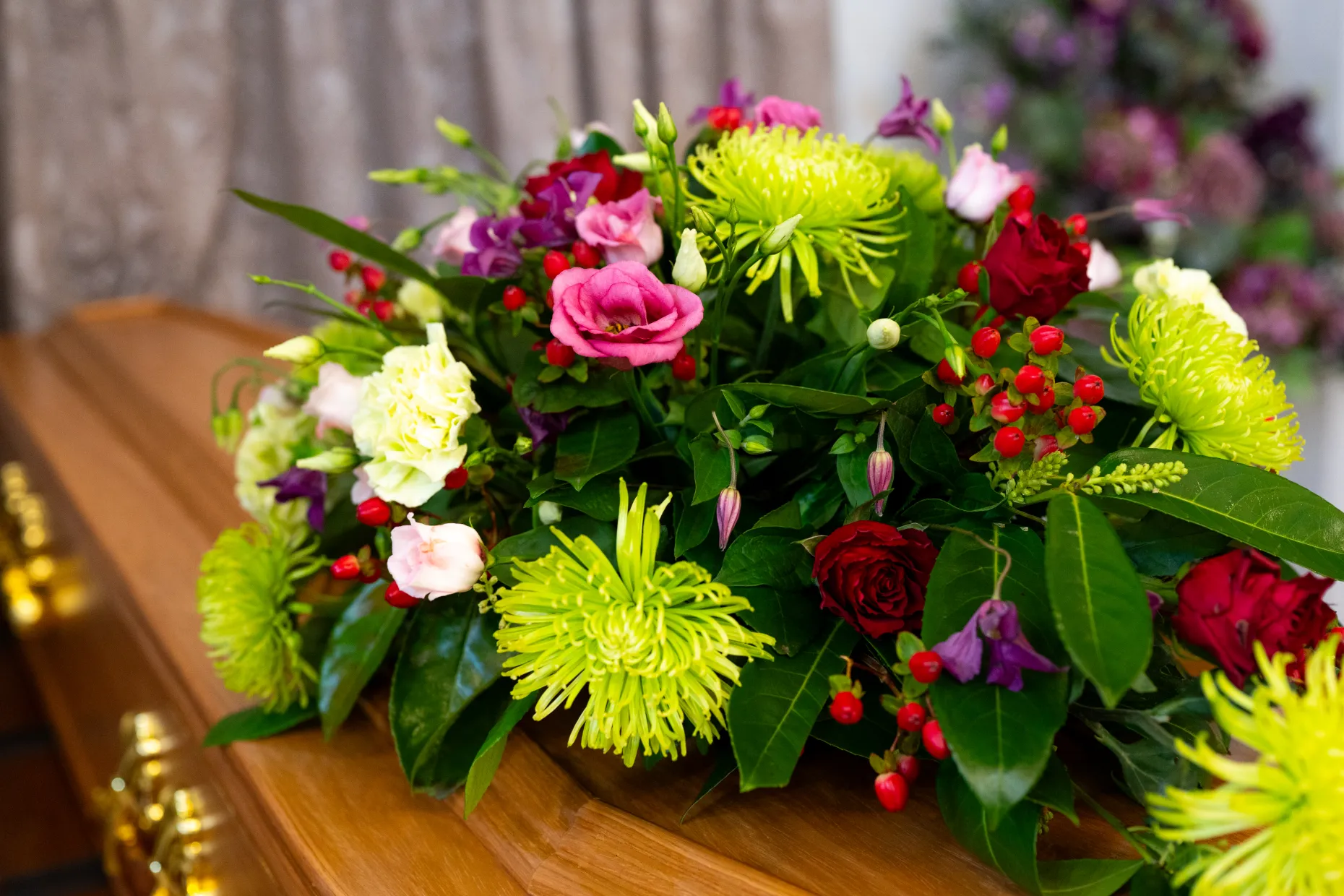
Fresh flowers are used in moderation to enhance the setting. Flowers and wreaths are removed at the church door and replaced afterwards. Many families ask for a Mass to be offered for the person who has died instead of flowers.
A Catholic funeral follows three stages rather than a single service: the vigil beforehand, the funeral liturgy, and the rite of committal. The structure comes from the Order of Christian Funerals, though customs vary between parishes. This guide covers what to expect – before, during and after – and how your local Dignity funeral director can help you arrange it.
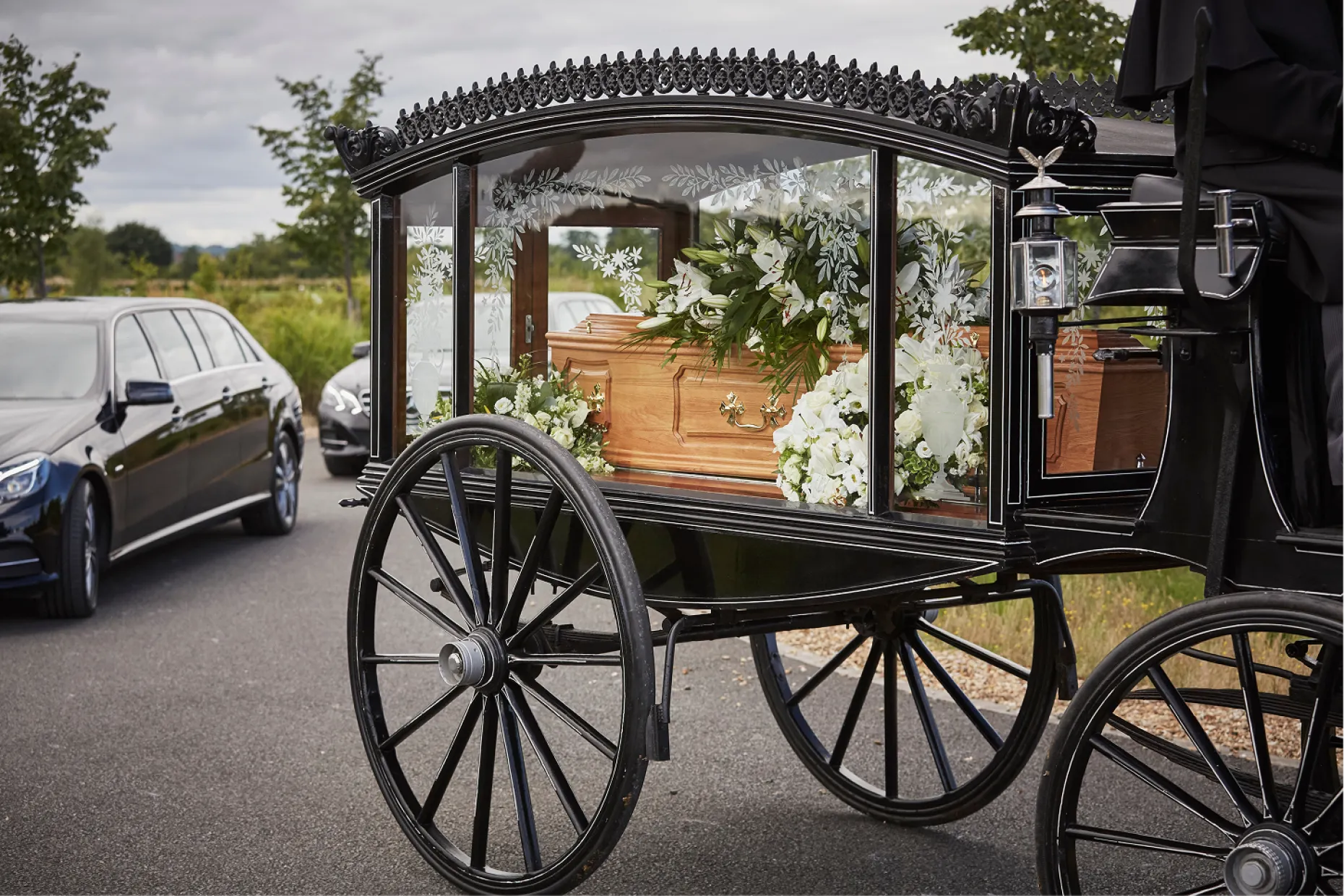
Catholics believe death is the last Passover of the child of God, leading into the life of the Kingdom. Each person is judged immediately after death and receives eternal recompense in their soul.
Those who die in God’s grace but are still imperfectly purified undergo a purification before entering the joy of heaven. This is why prayer for the dead is central to a Catholic funeral in a way it is not in most other Christian traditions: the Church prays not only for the comfort of the living but for the person who has died. The funeral rites also express that the dead remain at one with the community of believers on earth, and that death does not break the bonds formed in life.
The Order of Christian Funerals sets out three stages. The first is the vigil and its related prayers, held between the death and the funeral. The second is the funeral liturgy, normally a Mass in the parish church of the person who has died. The third is the rite of committal, at the graveside or the crematorium.
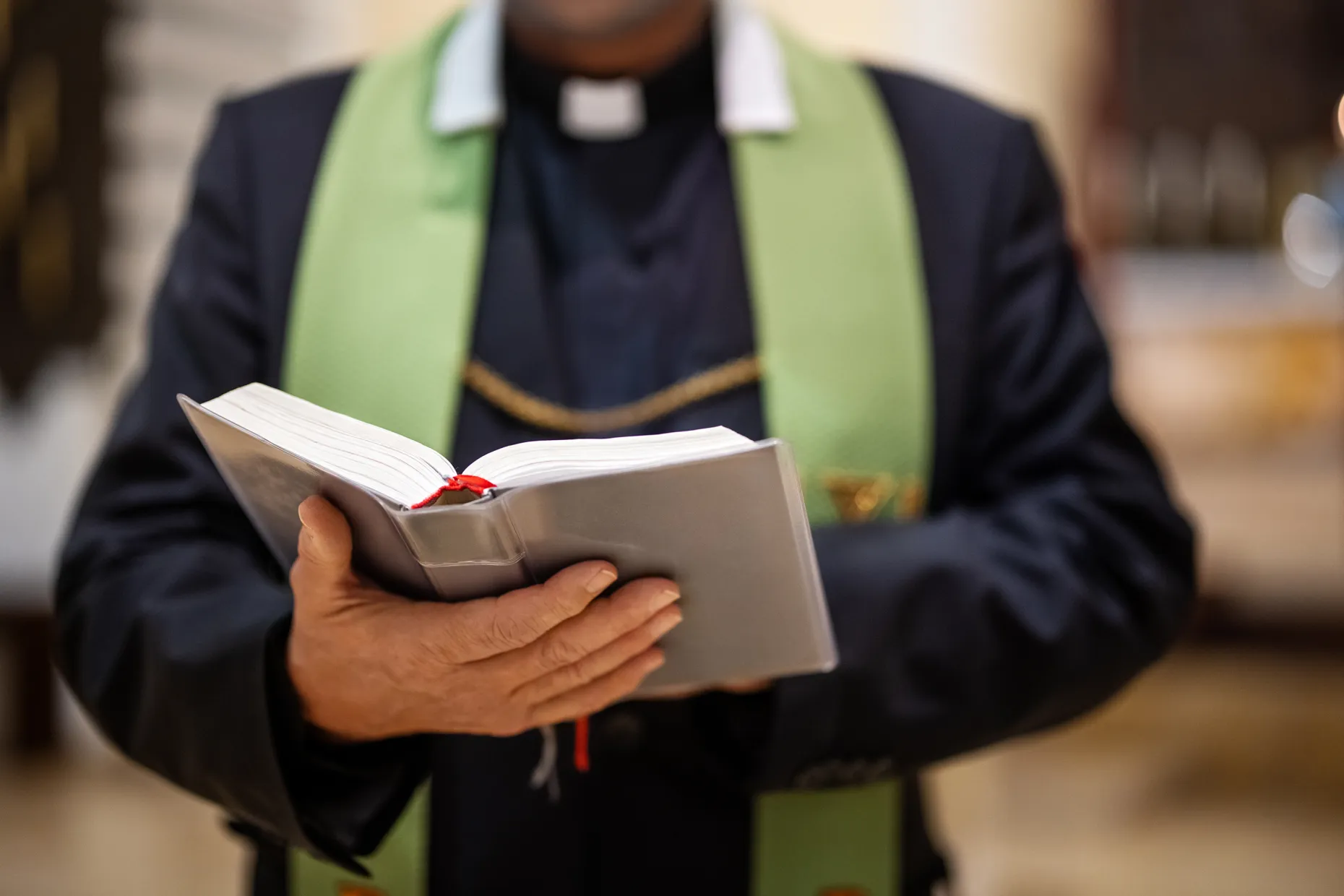
A priest presides at the Mass. Where no priest is available, a deacon may lead a funeral liturgy outside Mass, and a lay person may lead the vigil or the committal. Family members are encouraged to read, to serve as pallbearers, and to take part.
At Dignity, we support families of every faith and background. From hosting the vigil to arranging reception of the coffin at your church the evening before, your local funeral director has the experience to honour every detail. If you need to arrange a Catholic funeral, contact your local branch and we’ll talk everything through with you.
A Catholic funeral is a liturgy, and it has its own conventions. Here's what to expect:
Fresh flowers are used in moderation to enhance the setting. Flowers and wreaths are removed at the church door and replaced afterwards. Many families ask for a Mass to be offered for the person who has died instead of flowers.
There is no food during the liturgy. Families usually gather afterwards, and if the vigil is held at home the evening before, visitors are often fed there too.
Smart, subdued clothing is appropriate and there is no requirement to cover your head.
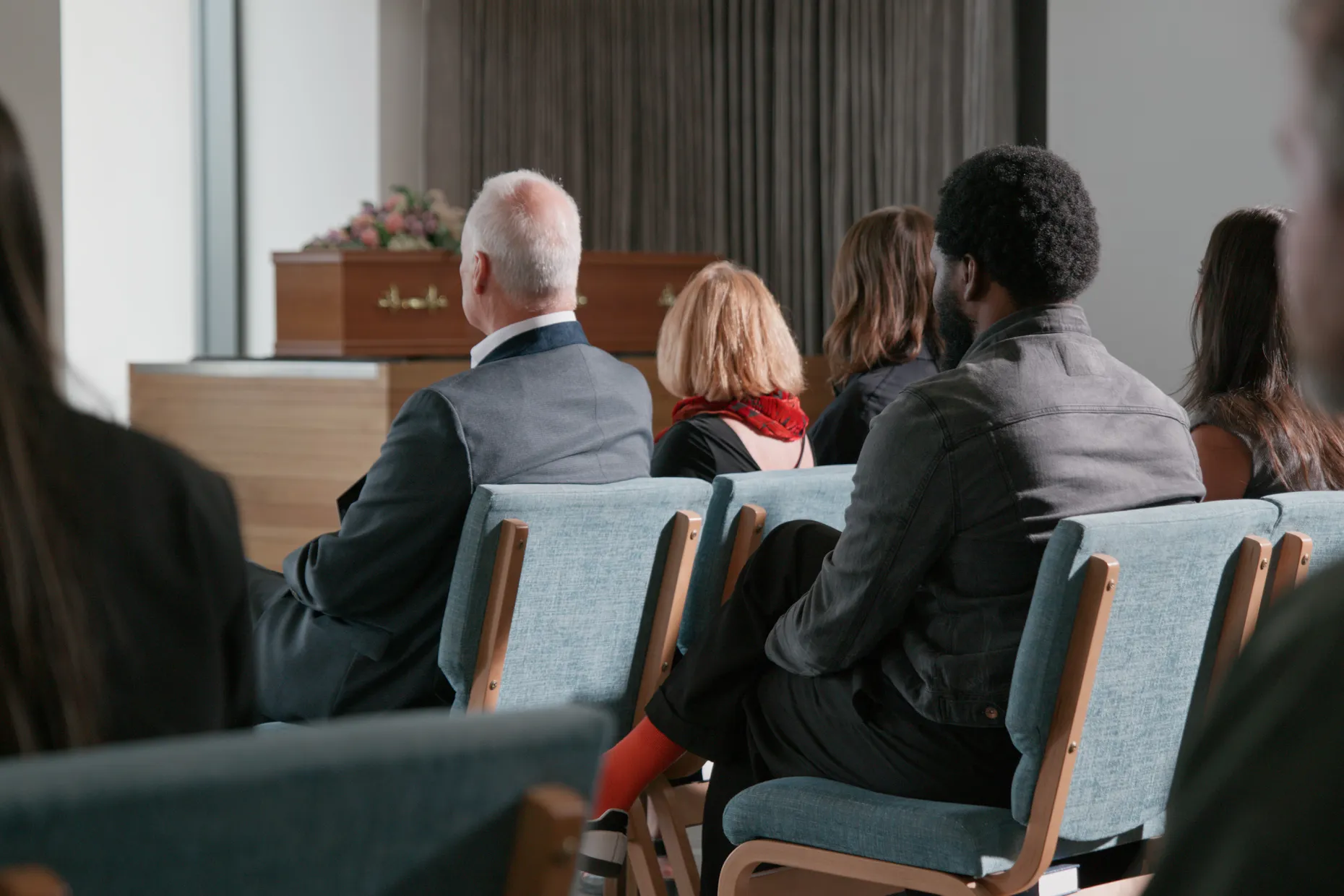
If you are not Catholic, you are welcome at the Mass but it is usual to stay seated rather than come forward for Communion. You may be invited to sprinkle holy water or earth at the graveside.
The cost of a Catholic funeral in the UK depends on the funeral director, the church, and the cemetery or crematorium you choose. Most Catholic families choose a vigil the evening before, a funeral Mass in their own parish church, and a committal at a cemetery or crematorium. Church offerings and cemetery or crematorium fees are set separately from our own and vary by location. Remember that where there is a cremation, the burial of ashes comes later and should be planned for. Your local Dignity funeral director can talk you through everything that is included, and the costs.
Our funeral directors are at the heart of their communities, in over 500 locations across the UK. Wherever you live, you’ll have an experienced professional by your side throughout, caring for you and the person who’s died.
At Dignity, we’re here to support people of all religions and none. We can arrange Anglican, Methodist, Baptist, Quaker, Orthodox, Hindu, Muslim, Jewish, Buddhist and Sikh funerals. Call your local funeral director today to talk about your needs.
Reviews for Dignity Group
We’re here to answer all your questions. If anything isn’t clear, please ask us.
More guidance on funeral traditions across different faiths and cultures.
A Roman Catholic funeral centres on the Mass, and Roman Catholic and Catholic mean the same Church: what to expect, etiquette, what to wear and costs.
Christian funerals vary widely between churches but share the same hope: what to expect before, during and after, etiquette, what to wear and costs.
An Anglican funeral is open to everyone, churchgoer or not, and led by your local vicar: what to expect before, during and after, etiquette and costs.