Coffins and caskets
This guide showcases our collection of coffins and caskets, from timeless traditional designs to more personalised options that celebrate a unique life. It explains the choices available and highlights the meaningful ways families can add personal touches and treasured mementoes as part of a loved one's final farewell.
- 5 minute read
- 2 September 2026
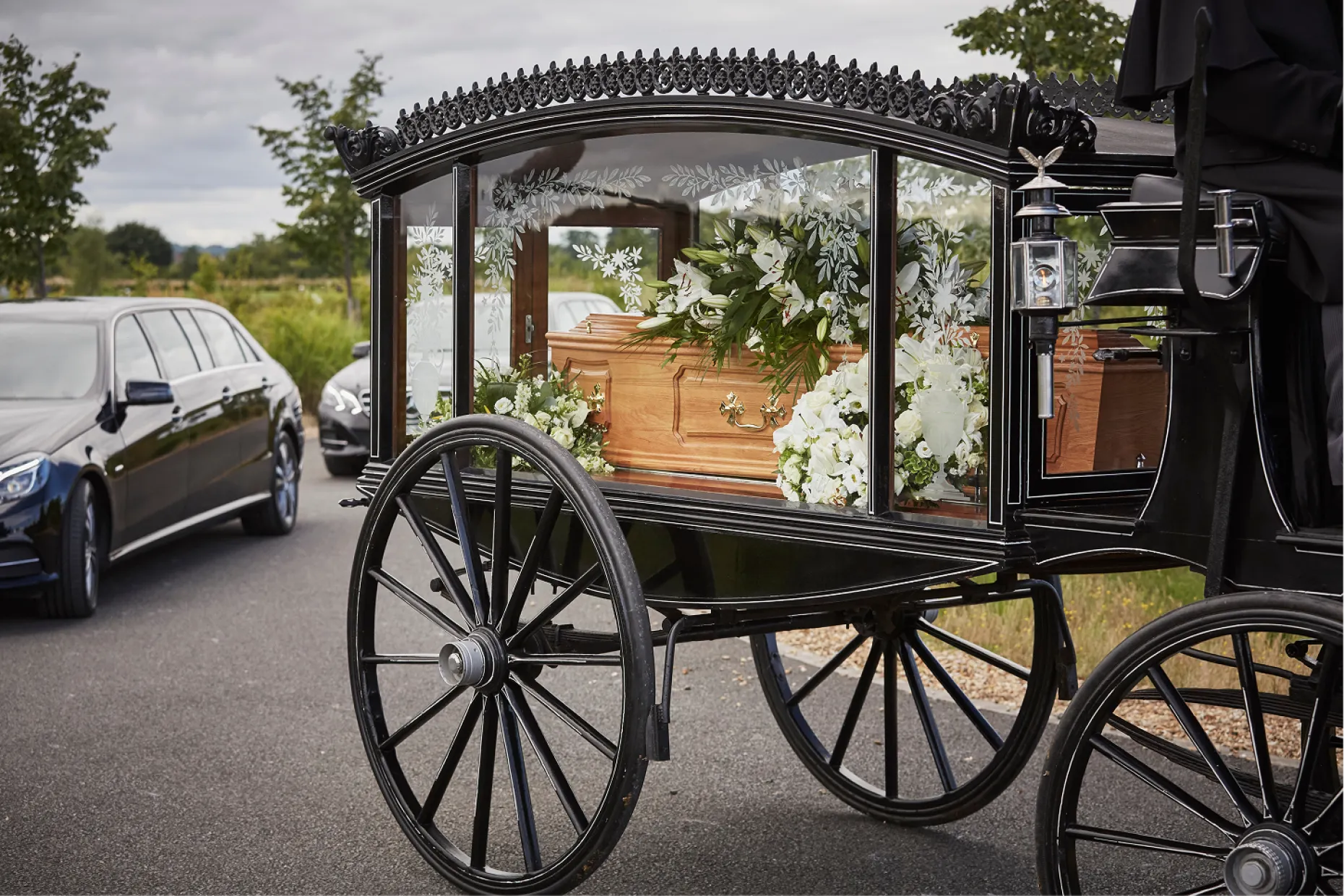
How to choose a coffin or casket
Choosing a coffin or casket for the person who has died can help with the bereavement process, and it is an important part of the funeral arrangements.
Here are a few things to consider.
If you are still unsure how to choose a coffin or casket, your funeral director has an extensive range available across the UK and will guide you through all of your options.
What is the difference between a coffin and a casket?
The main difference between a coffin and a casket is in the design. Funeral coffins are tapered at the head and foot, wide at the shoulders, and often have six sides.
Funeral caskets are rectangular in shape with four sides. They are often constructed of better quality materials and have a hinged lid.
Traditional funeral coffins and caskets
Our traditional and classic coffins are suitable for both burial and cremation, and are available in different colours and materials.
We know that caring for the environment is an important consideration for many people. Our aim is to provide excellent quality and service while reducing any impact on the environment.
Our collection of funeral caskets
Alongside our traditional funeral coffins, we also offer further choice in the casket collection. Everyone’s needs are different, and we will give you as much support, help and advice as you need when choosing a casket.
Colourful coffins and picture coffins
Colourful coffins give you the opportunity to plan a colourful funeral that reflects the passions of the person who has died and celebrates their life.
If you want the funeral to be truly unique, with a more creative touch, you can choose from our picture coffin designs. For an additional cost, you can even choose a completely bespoke picture coffin, taking inspiration from a special place, a favourite sport or hobby, or a personal photograph.
What is an eco coffin?
Eco coffins are made from sustainable materials and are typically used for woodland burials and eco-funerals. We take the responsibility of managing global resources seriously, and we source products ethically and with consideration for the environment.
We offer eco coffins as well as biodegradable coffins, containers and scatter tubes, so you can choose the right biodegradable option when planning a funeral.
What you can place in a coffin
You may want to place personal items, such as photographs, letters or flowers, in a coffin or casket. Your funeral director will be happy to make these arrangements, providing a fitting tribute.
There are some restrictions on what you can put in a coffin, for both burial and cremation funerals. Contact your local funeral director to discuss your options and the special items you would like to place inside.
Religious and cultural requirements
All funeral coffins and caskets have nameplates. If you would like any religious or other symbols on the coffin, we have a wide range available, including Asian and non-Christian symbols. We also have cords and tassels for traditional Scottish funerals.
Memorials
Memorials are a way to remember the person who has died. They can range from a headstone at a grave to a simple flower in a garden of remembrance. Memorials provide comfort for many people, giving them a place to visit.
When choosing a memorial it is important to have time to reflect on your decision, and to understand the different regulations that may affect your choice. We can help you with your choice of memorial after the funeral.
How to carry a coffin
Carrying a coffin is a delicate task. If you have been asked to be a pallbearer, it is important to understand what is involved and the responsibilities that come with the role.
Pallbearers typically carry the coffin at waist height or on their shoulders, or wheel it in with the assistance of a small trolley known as a wheel bier. Read our guide to being a pallbearer for more guidance on carrying a coffin or casket.
Find a funeral director
Our funeral directors are at the heart of their communities, in over 500 locations across the UK. Wherever you live, you’ll have an experienced professional by your side throughout, caring for you and the person who has died.
Reviews for Dignity Group
- Included:Over 200 years of caring for families
- Included:Local service from over 500 branches
- Included:Funerals, plans, probate and more
Frequently asked questions
We’re here to answer all your questions. If anything isn’t clear, please ask us.
Trusted by families across the UK
Related guides
Alternative funerals
The alternatives to a traditional service – natural burial, direct cremation, humanist ceremonies, burial at sea – and what to check before you decide.

Choosing a funeral director
What to look for when comparing funeral directors – local availability, itemised pricing, the care given to the person who has died, and how well they listen.

Planning the ceremony
Where to hold the ceremony, who can lead it, and how to choose music, readings and tributes – starting from the person rather than from the arrangements.