Planning the ceremony
The ceremony is the part of the day people remember. There is more freedom in it than most families expect. This guide covers where you can hold it, who can lead it, how to choose music and readings, and the small touches that make it feel like the person it is for.
- 6 minute read
- 2 September 2026

Start with the person, not the format
The easiest way into planning a ceremony is to talk about the person who has died rather than about arrangements. What they were like, what they loved, what made people laugh about them.
Almost every decision that follows answers itself once that conversation has happened. Your funeral director will have it with you, and will know what is possible locally.
Where to hold the ceremony
Most ceremonies are held in a crematorium chapel, a church or other place of worship, or a cemetery chapel before a burial.
There are other options. Some families hold the ceremony somewhere that mattered to the person and go on to the crematorium afterwards, or hold a short committal first and a fuller celebration of life later, when everyone can gather. Ask your funeral director what is available near you, and how long you will have.
Who leads it
You have a real choice here.
Music, readings and tributes
Most ceremonies have music as people come in, one or two pieces during the ceremony, and something as everyone leaves. Anything is allowed – a hymn, a favourite record, a choir, a piper, a recording of them singing.
Readings can be religious, a poem, a passage from a book they loved, or something someone in the family has written. Tributes work best when they are short and specific: one memory told well says more than a life story.
Nobody has to speak. If someone wants to but is not sure they will manage it, they can write it and ask the celebrant to read it.
The order of service
An order of service tells people what is coming and gives them the words to any hymns. It is also something families keep.
It usually carries a photograph, the person’s name and dates, the running order, and details of the wake or any donations. Your funeral director can arrange printing, or you can produce it yourself.
Personal touches
Small things often mean the most:
- a photograph or a slideshow as people arrive
- their own clothes, or a shirt in their team’s colours
- flowers that meant something, or a request for donations instead
- a personalised or colourful coffin
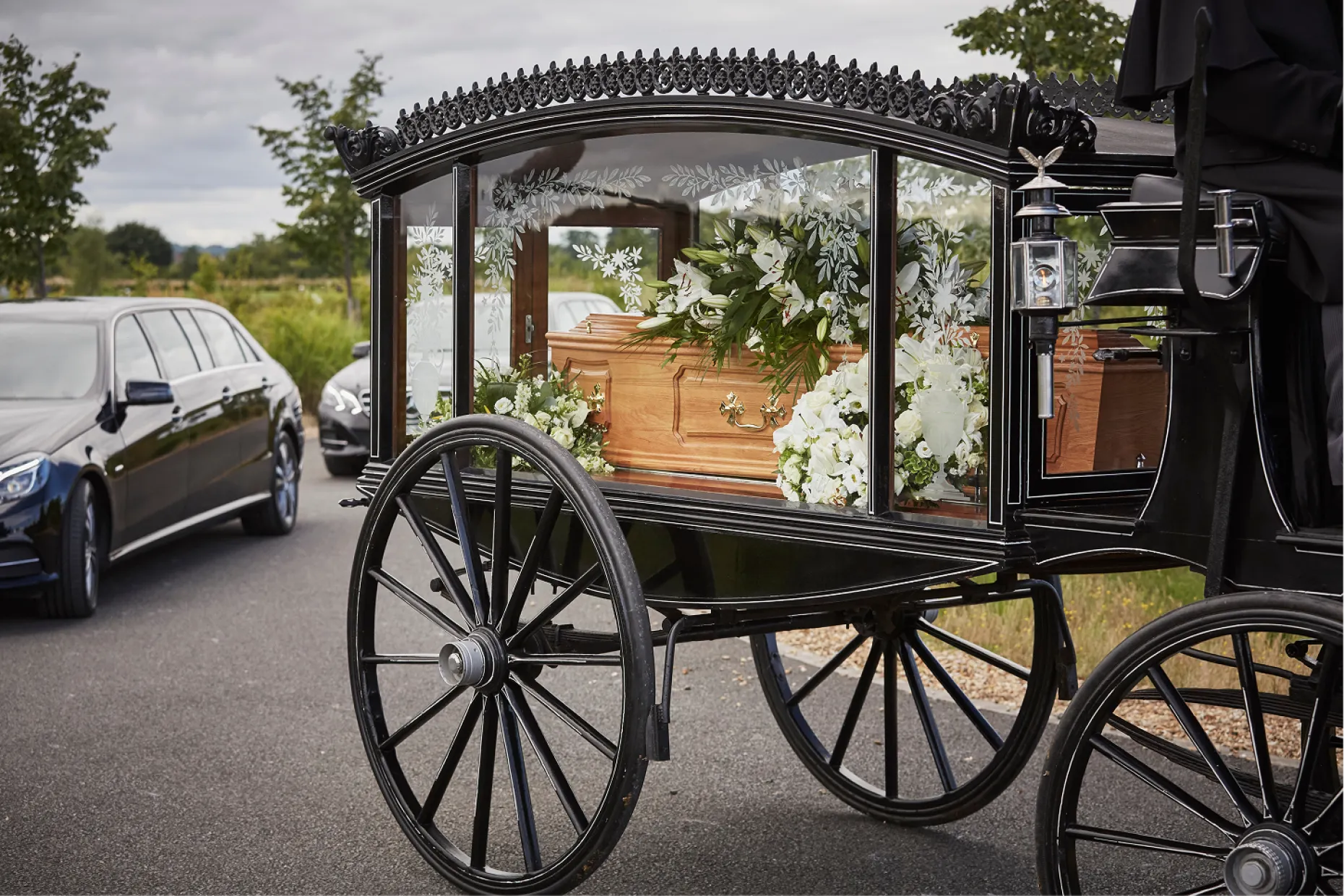
- an alternative hearse, from a horse-drawn carriage to a motorcycle
- asking people to wear bright colours rather than black
- something for children to do, such as drawing a picture to send in
If there is something you are not sure is possible, ask. It very often is.
After the ceremony
Most families gather afterwards for a wake, at home or in a private room somewhere nearby. It does not have to be formal, and it is often the part people find most comforting.
If you would rather not hold one, that is fine too. Some families arrange something weeks later instead, when the first shock has passed.
Find a funeral director
Your local funeral director will plan the ceremony with you, and tell you what is possible at the venues near you.
Reviews for Dignity Group
- Included:Over 200 years of caring for families
- Included:Local service from over 500 branches
- Included:Funerals, plans, probate and more
Frequently asked questions
We’re here to answer all your questions. If anything isn’t clear, please ask us.
Trusted by families across the UK
Related guides
Coffins and caskets
Choosing a coffin or casket – the difference between them, materials from traditional wood to eco and picture designs, and what can be placed inside.

Woodland burial
Natural burial in woodland – what happens on the day, the memorials sites allow, the eco coffins used, and what a plot is likely to cost.
Eco burial
Making a burial as environmentally friendly as possible – shrouds, biodegradable urns, tree pod burials, eco coffins and greener transport.