Gifts and flowers
Simplicity is the guiding value, so keep anything you bring modest. Practice on flowers varies between meetings, so ask the family or the appointed Friends rather than assume.
A Quaker funeral is a meeting for worship, not a service with an officiant. It is held largely in silence, and anyone present may speak as they are moved. This guide covers what to expect – before, during and after – and how your local Dignity funeral director can support you to arrange a Quaker funeral.
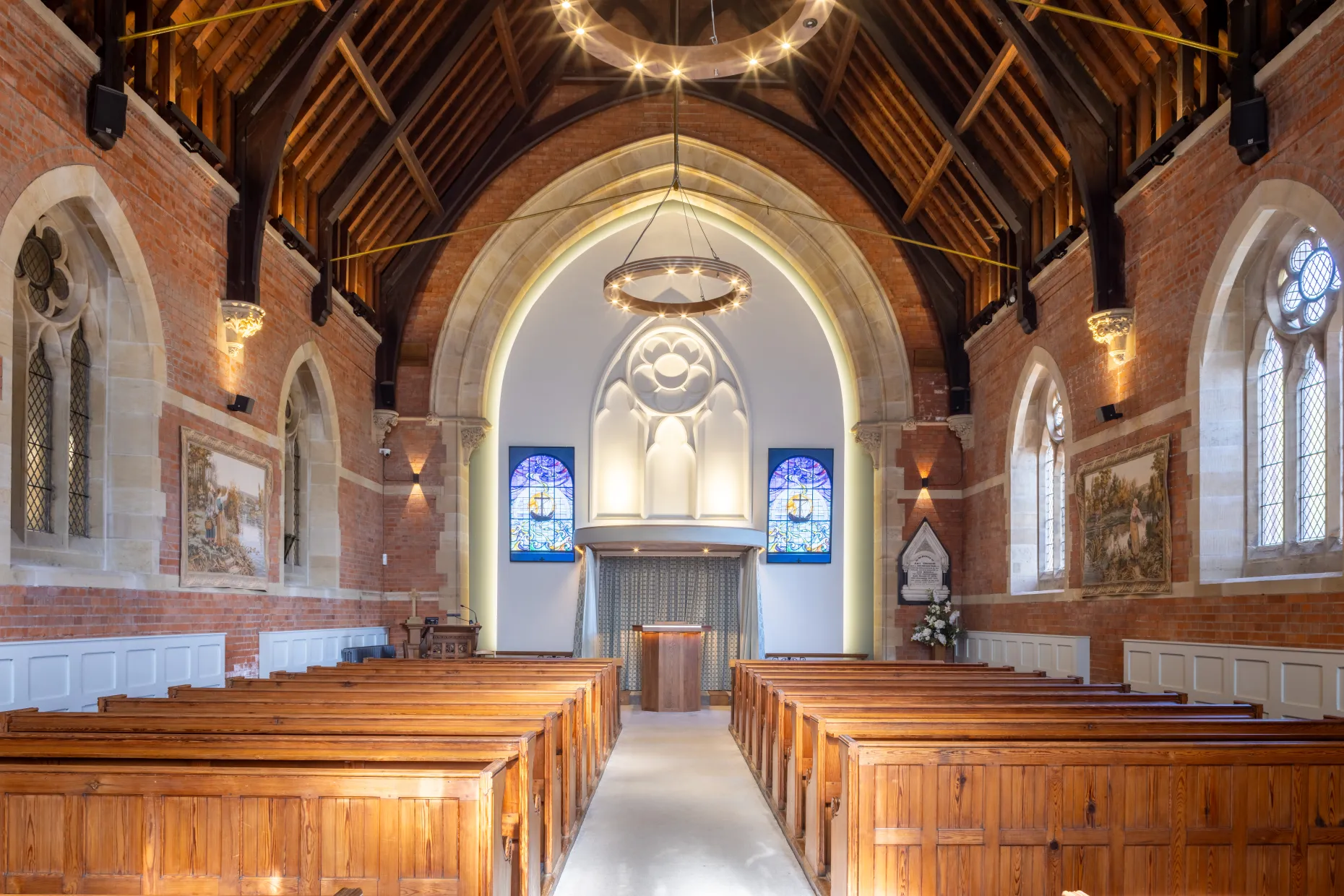
Quakers have no creed and no required doctrine about what follows death. Quaker faith is described as a search for truth rather than an arrival, and the Religious Society of Friends welcomes people without requiring adherence to any particular belief.
Quaker writing on death records personal experience rather than doctrine, and it doesn't always agree with itself: one Friend writes that death is not an end but a beginning, the escape of the spirit from its old limitations; another writes that she still questions the conventional language of resurrection and everlasting life, and finds eternal life instead in each present moment. Both views are held within the same Quaker tradition.
The occasion is formally called a meeting for worship on the occasion of the death of our Friend. Friends are explicitly directed not to adopt any rigid pattern for the conduct of funerals.
There is no minister and no order of service. A Friend opens the meeting briefly, then the meeting settles into silence in which anyone present may speak. An elder brings it to a close, and everyone is invited to shake hands. Two formats are common: a brief meeting for worship at the crematorium, which is sometimes all that is possible or wanted; or a fuller meeting at a meeting house on a separate day.
At Dignity, we support families of every faith and background, and we understand that a Quaker meeting is not a service to a timetable. We plan around silence rather than around a running order, and we work with the Friends your area meeting has appointed. If you need to arrange a Quaker funeral, just contact your local Dignity funeral director who will talk everything through with you.
If you have not been to a Quaker meeting before, someone will explain it at the start. Here's what to expect:
Simplicity is the guiding value, so keep anything you bring modest. Practice on flowers varies between meetings, so ask the family or the appointed Friends rather than assume.
None during the meeting. Many meetings offer refreshments afterwards at the meeting house, and it is a good moment to speak with the family.
There is no dress code. Plain and unremarkable is in keeping with the Quaker value of simplicity; nothing more is expected of you.
You may speak if you are moved to, and you may equally sit in silence for the whole meeting – both are valued. Do not feel obliged to fill a pause. At the end everyone shakes hands, which is how a Quaker meeting always closes.
The cost of a Quaker funeral in the UK depends on the funeral director and the crematorium, cemetery or burial ground you choose. Quaker practice tends towards simplicity, and many families choose an unelaborate coffin and a brief meeting at the crematorium, or a meeting at a meeting house with a separate committal. One point is specific to Friends: it is not Quaker practice to accept a fee for ministry. Your local Dignity funeral director can talk you through everything that is included, and the costs.
Our funeral directors are at the heart of their communities, in over 500 locations across the UK. Wherever you live, you’ll have an experienced professional by your side throughout, caring for you and the person who’s died.
At Dignity, we’re here to support people of all religions and none. We can arrange Catholic, Anglican, Methodist, Baptist, Orthodox, Hindu, Muslim, Jewish, Buddhist and Sikh funerals. Call your local funeral director today to talk about your needs.
Reviews for Dignity Group
We’re here to answer all your questions. If anything isn’t clear, please ask us.

Singing matters greatly at a Methodist funeral, and there may be more than one gathering: what to expect before, during and after, etiquette and costs.
A Baptist funeral is shaped by your local church rather than a service book: what to expect before, during and after, etiquette, what to wear and costs.
An Orthodox funeral is a sequence of prayers rather than one occasion, and burial is preferred: what to expect, etiquette, what to wear and costs.